


Fine upholstery ages gracefully when routine dust is removed before grit wears down fibres—and fails fastest when a fresh spill is scrubbed with hot water or household sprays. Whether you own a classic carved suite or a contemporary salon, safe maintenance starts with reading the textile’s cleaning code and protecting the finished timber beside it. Explore our bespoke collections on luxury sofa sets and luxury armchairs.
1. Reading upholstery care codes: W, S, W/S and X
Check under the seat platform, inside cushion zip allowances or on the swatch specification sheet for the standard four-code system documented in University of Georgia Cooperative Extension’s upholstery care guide:
- W (Water-based): Spot-clean using only the whipped foam of mild, neutral soap and distilled water—never soak the backing or cushion core.
- S (Solvent only): Use a water-free dry-cleaning solvent in a ventilated room; even pure water can leave tide rings or shrink viscose/linen blends.
- W/S (Water or solvent): Either mild water-based foam or solvent cleaner may be used depending on whether the stain is water- or oil-based.
- X (Vacuum only): Do not apply water, foam or liquid solvent; vacuum gently and call a professional upholstery specialist for stains.
Always test any product on an inconspicuous hem or back skirt first and wait until fully dry to check for dye transfer or pile distortion.
2. Routine care and stain rules by upholstery material
| Material | Weekly care | Safe spot response | What to avoid |
|---|---|---|---|
| Velvet | Vacuum along the pile direction with a soft brush nozzle | Blot gently; apply code-matched light foam and brush nap once dry | Circular rubbing, sitting on damp velvet, handheld steamers |
| Chenille | Smooth upholstery nozzle vacuuming; rotate reversible cushions | Blot from outer edge inward with barely damp white microfibre | Stiff bristles that snag yarns and heavy water saturation |
| Linen & blends | Frequent light vacuuming; wash removable covers strictly per fabric tag | Check S or W/S tag first; feather moisture outward minimally to avoid rings | Hot wash cycles, tumble drying (shrinkage) and chlorine bleach |
| Jacquard weave | Low-suction vacuuming with a soft brush | Vertical dabbing so raised pattern floats are never snagged | Abrasive sponges and optical brighteners |
| Faux leather | Dust with dry or barely damp microfibre | Lukewarm mild soap wipe followed immediately by clean damp wipe and dry towel | Alcohol wipes, acetone, bleach and solvents that crack polyurethane coatings |
| Genuine leather | Dust with soft dry cotton; vacuum crease seams | Blot spills immediately; use dedicated pH-neutral leather cleaner after pre-testing | Dish soap, olive oil, saddle soap and drying near radiators |
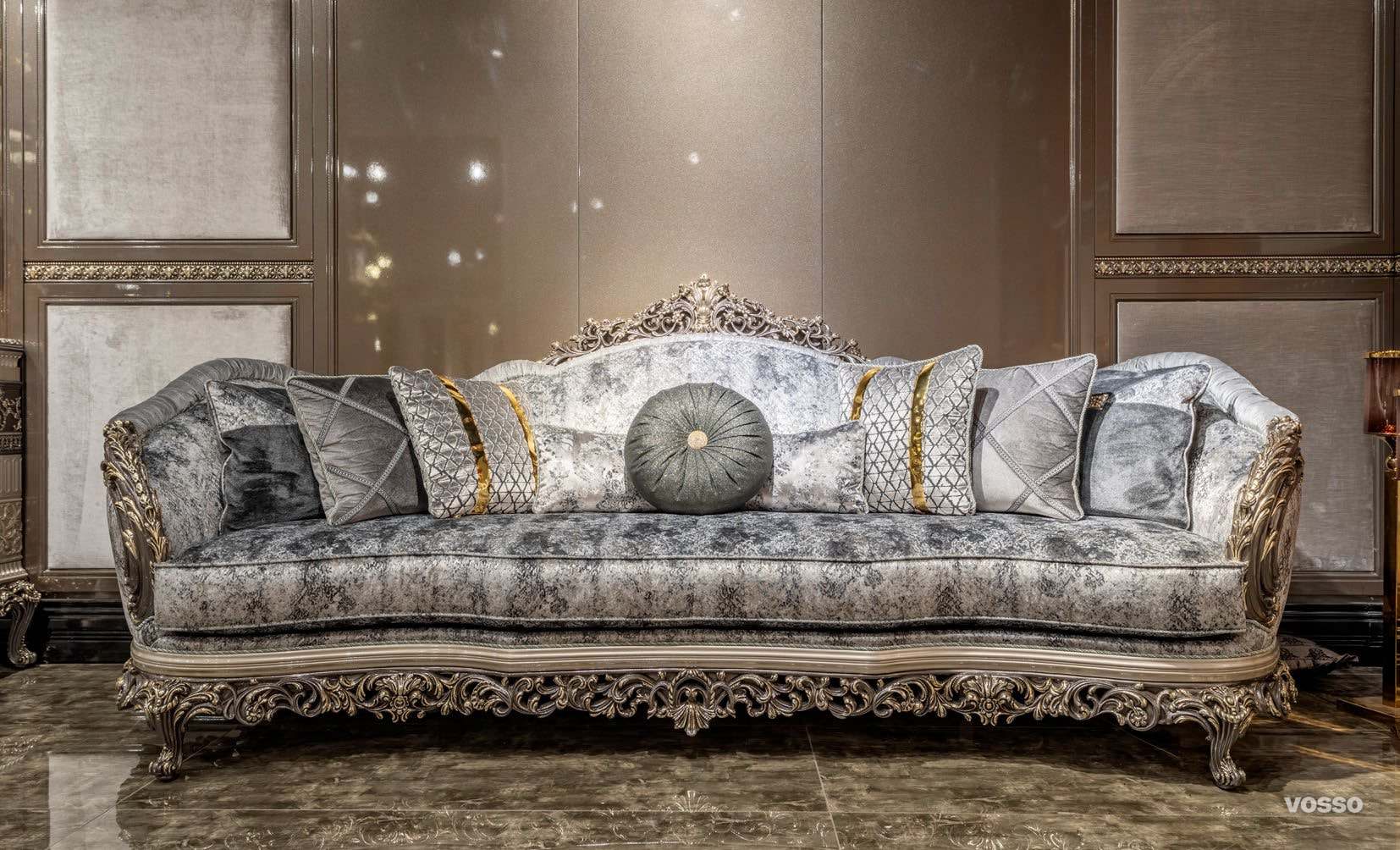
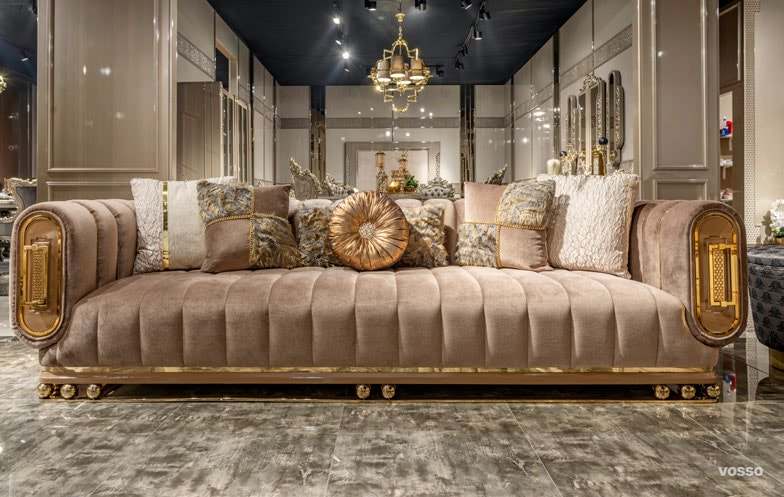
3. First-aid steps by stain type, heat/sun protection and carved frames
Always work from the outside edge of a spill toward the centre using undyed white cloths:
| Stain type | Immediate action | Follow-up (after hidden spot test) |
|---|---|---|
| Coffee, tea & juice | Blot repeatedly with dry white towels without pressing liquid deeper | Dab lightly with neutral soap foam (on W/W-S fabrics), lift residue with damp cloth and air-dry |
| Food grease & oil | Lift solids gently with a blunt spoon edge | Dust with cornstarch for 15–20 minutes to draw oil out, vacuum, then treat per care code |
| Ballpoint ink | Never wet with water, which spreads ink rapidly | Blot pinpoint-style with a cotton swab and code-approved cleaner or consult a specialist |
| Mud & dried soil | Leave untouched until completely dry—wiping wet mud grinds pigment in | Brush dried crumbs loose, vacuum thoroughly, then dab any faint mark lightly |
Keep upholstered and carved furniture out of prolonged direct sunlight (ACT lightfastness guidelines note that UV exposure fades all dyed textiles over time) and away from radiators. When spot-cleaning upholstery next to exposed wood, hold a dry cloth as a shield along the rail: water, glass cleaner and alcohol wipes must never touch lacquered wood, gold-tone paint or imitation metal leaf—dust gilded and carved details only with a dry, soft brush.
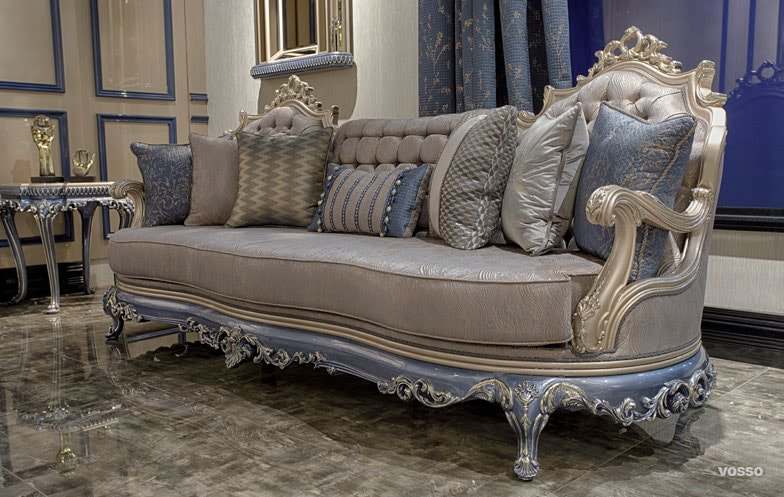
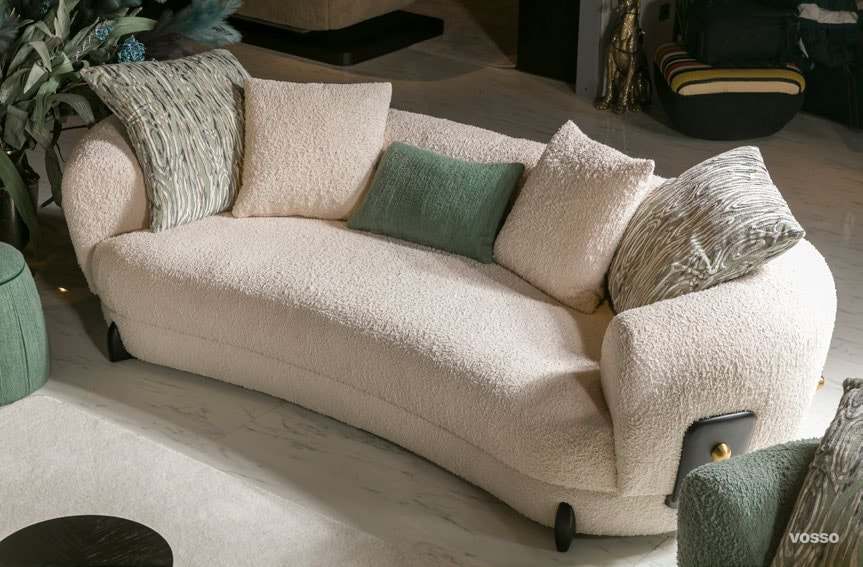
4. Washable covers, fabric options, warranty and reupholstery at Vosso
In Vosso’s Siteler workshop, cushion covers on sofa sets are removable and washable in accordance with the selected textile’s care instructions. We offer stain-resistant, wipeable and pet-friendly upholstery options (recorded by code on your written order confirmation), or you may supply your own fabric and we calculate the required meterage. We do not make leather or Chesterfield sofa sets; leather and Chesterfield sofas and Chesterfield armchairs are made and priced individually.
Finished furniture carries a 2-year warranty and lifetime support (company facts, FAQ). Manufacturing defects in frames, foam, stitching, carving, leaf and lacquer are covered; spills, stains, cuts, pet damage and direct heat or sun damage are excluded. For sets originally made by Vosso, we also provide post-warranty repair and full reupholstery by separate written quote.
Sources
- Upholstery cleaning codes (W, S, W/S, X), hidden pre-testing and blot-inward stain care: University of Georgia Cooperative Extension (C1062): extension.uga.edu
- Lightfastness (AATCC 16) and sunlight fading behaviour: Association for Contract Textiles (ACT): contracttextiles.org
- Woven upholstery abrasion guidelines: Association for Contract Textiles (ACT): contracttextiles.org
- Routine vacuuming and bleach-free upholstery care: Kvadrat Care Guidelines: kvadrat.dk
Vosso warranty and cushion specifications reflect our workshop policy; cleaning methods are general guidance and must be pre-tested on a hidden seam. Technical review: Kerim Bey, Production Manager.
Last updated:
Vosso, sofa frames since 1984, finished sofa sets since 1999 in Siteler, Ankara